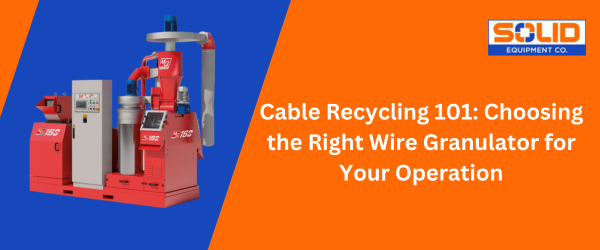
Cable recycling has become one of the most profitable segments of the recycling industry. As copper and aluminum prices remain valuable, recycling operations are looking for better ways to recover these metals from insulated wire and cable while minimizing labor costs and maximizing material recovery.
At the center of this process is the wire granulator. Whether you’re a scrap yard operator, auto dismantler, electrical contractor, or recycling facility manager, choosing the right wire granulator can significantly impact productivity, recovery rates, and long-term profitability.
What Is Cable Recycling and Why Does It Matter?
Cable recycling is the process of separating valuable metals from insulation and other non-metallic materials found in electrical wire and cable. Rather than sending insulated wire to landfill or selling it as a lower-grade commodity, recyclers can recover clean copper or aluminum that commands a significantly higher market value.
Effective cable recycling helps facilities:
- Increase copper recovery and aluminum recovery rates
- Generate more revenue from existing material streams
- Reduce waste sent to landfills
- Improve overall scrap metal recovery efficiency
- Support sustainable recycling scrap metal operations
For many facilities, investing in the right industrial recycling equipment creates opportunities to unlock additional value from materials that were previously underutilized.
How Does a Wire Granulator Work?
A wire granulator machine is designed to process insulated wire by chopping it into smaller pieces and separating the metal from the insulation.
The typical process includes:
- Feeding wire into the machine
- Granulating the material into smaller particles
- Separating metal and insulation through air, density, and vibration systems
- Collecting clean metal fractions for resale
Unlike a traditional wire stripping machine, a wire granulator can process large volumes of mixed cable efficiently with minimal labor.
Modern wire granulators are capable of producing high-purity copper and aluminum output suitable for premium scrap markets.
Choosing the Right Wire Granulator
Not every operation requires the same equipment. The ideal wire granulator depends on several factors.
Cable Type
Different machines perform better depending on the materials being processed:
- Residential wire
- Communication cable
- Automotive harnesses
- Aluminum cable
- Mixed insulated wire
Facilities handling a wide variety of materials often benefit from more versatile cable wire granulator systems.
Processing Volume
The amount of material processed daily is one of the most important selection criteria.
| Operation Size | Recommended Equipment |
| Small operation | Compact wire granulator machine |
| Mid-sized recycler | Mid-capacity copper wire granulator |
| High-volume processor | Industrial scrap copper wire granulator machine |
Matching equipment size to throughput requirements helps avoid bottlenecks while preventing unnecessary capital expenses.
Small, Mid-Size, and Industrial Systems
Small Wire Granulators
Small systems are ideal for:
- Electrical contractors
- Small scrap yards
- Startup recycling operations
Benefits include:
- Lower upfront cost
- Smaller footprint
- Reduced power consumption
Mid-Size Wire Granulators
These systems provide a balance between capacity and investment.
They are often the best choice for:
- Growing recyclers
- Regional scrap processors
- Auto dismantling facilities
A mid-sized copper wire granulator typically offers strong recovery rates while maintaining manageable operating costs.
Industrial Wire Granulators
Industrial systems are designed for facilities processing large volumes of cable daily.
Advantages include:
- Higher throughput
- Advanced separation systems
- Superior copper granulation performance
- Reduced labor requirements
For high-volume operations, the increased productivity often delivers a faster return on investment despite higher upfront costs.
Why Purity and Recovery Rates Matter
When evaluating a wire granulator, recovery quality is just as important as throughput.
Key questions include:
- How clean is the recovered copper?
- What percentage of metal is recovered?
- How much metal remains in the waste stream?
Many of today’s best copper wire granulator systems can achieve exceptionally high recovery rates, helping operators maximize the value of every pound processed. Facilities researching recovery performance often find it helpful to review examples such as how much copper a wire granulator can recover when comparing equipment options.
Maintenance, Labor, and Operating Costs
The purchase price is only one part of the equation.
Operators should evaluate:
- Blade replacement schedules
- Maintenance requirements
- Labor needs
- Energy consumption
- Parts availability
A lower-cost machine that requires frequent repairs may ultimately cost more than a higher-quality system with dependable performance and readily available support.
Floor Space, Dust Control, and Safety
Wire processing creates dust and fine particles that must be managed effectively.
Important considerations include:
- Available floor space
- Dust collection systems
- Noise levels
- Operator safety features
- Material flow through the facility
Many modern cable recycling machine systems incorporate integrated dust control and safety features that help create a cleaner and safer work environment.
Should You Buy New or Used?
Both options can provide strong value depending on your operation.
A quality used wire granulator for sale may offer significant savings while still delivering reliable performance. Many recyclers also explore used copper wire granulators for sale when expanding capacity without making a large capital investment.
Working with an experienced equipment supplier helps ensure that used equipment has been properly evaluated and supported.
Focus on Long-Term Productivity
The right wire granulator is not necessarily the cheapest machine. It is the one that consistently delivers the recovery rates, throughput, and reliability your operation needs.
Whether you’re evaluating a copper granulator, a cable recycling machine for sale, or a complete wire processing line, focus on long-term productivity, operating costs, and material recovery performance. A properly matched system can improve copper recovery, reduce labor requirements, and create a stronger return on investment for years to come.
For recycling operations looking to increase profitability and maximize scrap metal recovery, investing in the right wire granulator is often one of the smartest upgrades they can make.
