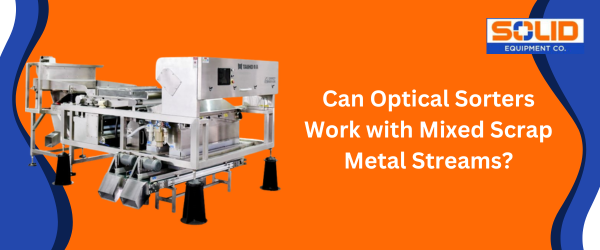
Modern recycling operations are processing more complex, mixed scrap streams than ever before. From shredded automobiles to e-scrap and mixed non-ferrous fractions, the challenge is no longer just collecting material. It is sorting it accurately, quickly, and profitably.
This is where optical sorters come in. But can they actually handle mixed scrap metal streams effectively? The short answer is yes. When properly integrated, optical sorting machines are one of the most powerful tools for improving metal recovery, purity, and operational efficiency.
What Are Mixed Scrap Metal Streams?
Mixed scrap streams contain a combination of different materials and metals, often including:
- Ferrous and non-ferrous metals
- Aluminum, copper, brass, stainless steel
- Insulated wire and electronic scrap (e-scrap)
- Plastics, rubber, and other contaminants
These streams are common in scrap metal sorting operations, especially after shredding or initial processing. The challenge is separating valuable metals from contamination while maintaining throughput.
How Optical Sorters Identify and Separate Metals
Optical sorters use advanced sensing and machine vision to identify materials based on their physical and chemical properties. Unlike traditional methods, they do not rely solely on magnetism or density.
A modern optical sorting machine typically uses:
- Cameras and machine vision to detect shape, color, and texture
- Near-infrared (NIR) or hyperspectral sensors to identify material composition
- AI-driven software to classify materials in real time
- Air jets or mechanical actuators to separate materials at high speed
For example, systems from providers like Chromasort specialize in identifying subtle differences between metals, making them highly effective for sorting scrap metal in mixed streams.
If you are evaluating an optical sorter for sale, understanding these capabilities is key to determining how it will perform in your specific application.
Can Optical Sorting Machines Process Mixed Scrap Streams?
Yes. Optical sorters are specifically designed to handle heterogeneous material streams.
They excel in environments where:
- Materials are mixed and visually similar
- Traditional separation methods fall short
- Higher-value metal recovery is critical
By analyzing each piece of material individually, optical sorting machines can sort scrap metal with a level of precision that manual or mechanical methods cannot match. Many facilities exploring broader industrial recycling solutions are integrating optical systems specifically for this reason.
What Metals Can Optical Sorters Detect?
Optical sorters can identify and separate a wide range of materials, including:
- Aluminum
- Copper
- Brass
- Stainless steel
- Insulated wire
- Certain alloys
- E-scrap components
They are especially valuable in recovering non-ferrous metals that are difficult to separate using magnets or eddy current systems alone.
How Accurate Are Optical Metal Sorting Machines?
Accuracy depends on material conditions and system configuration, but most modern optical sorters achieve very high sorting precision.
Typical Performance Benefits
- High purity output streams
- Significant contamination reduction
- Improved downstream processing efficiency
Facilities using optical sorting machines often see measurable improvements in scrap metal sorting quality and resale value. Insights shared in resources like the benefits of optical sorting machines reinforce how impactful these gains can be.
How Fast Can Optical Sorting Systems Process Scrap?
Throughput is one of the biggest advantages of optical sorters.
- High-speed conveyors process large volumes continuously
- Real-time identification allows instant separation
- Scalable systems can match facility capacity
For high-volume operations, this makes optical sorters a strong fit alongside other metal sorting equipment already in use.
Do Optical Sorters Replace Manual Scrap Sorting?
No. Optical sorters enhance, not eliminate, manual processes.
What They Replace
- Repetitive, labor-intensive sorting tasks
- Inconsistent manual decision-making
What They Improve
- Worker safety
- Sorting consistency
- Overall efficiency
In most facilities, optical sorting machines are integrated alongside manual and mechanical systems to create a more efficient workflow.
Integration with Other Sorting Technologies
Optical sorters perform best when combined with other metal sorting equipment.
A typical scrap metal processing line might include:
- Magnets to remove ferrous metals
- Eddy current systems for non-ferrous separation
- Optical sorters for fine material classification
This layered approach ensures maximum recovery. Facilities evaluating upgrades often reference guides on finding reliable recycling equipment suppliers to better understand how these systems work together.
ROI and Operational Efficiency
Investing in optical sorters delivers measurable operational benefits:
Increased Revenue
- Higher purity materials command better market prices
- Improved recovery of valuable metals like copper and aluminum
Reduced Costs
- Lower labor requirements
- Less reprocessing due to contamination
Improved Uptime
- Automated systems reduce bottlenecks
- Consistent performance improves supply chain efficiency
For operators evaluating a used optical sorter for sale or other used recycling equipment for sale, optical technology can offer a faster and more predictable return on investment. Additional insights on maximizing value can be found in resources like unlocking hidden value with used equipment.
Real-World Impact
Facilities processing shredded scrap, e-scrap, or mixed non-ferrous streams are using optical sorters to:
- Increase recovery rates
- Improve consistency in output materials
- Reduce contamination penalties from buyers
Working with an experienced partner like Solid Equipment allows operators to evaluate optical sorting machines, explore financing options, and integrate solutions tailored to their operation.
Final Thoughts
So, can optical sorters work with mixed scrap metal streams? Absolutely.
They are one of the most effective tools available for sorting metals in complex, high-volume environments. By combining machine vision, sensors, and AI-driven decision-making, optical sorters enable recycling facilities to achieve higher purity, better recovery rates, and stronger profitability.
For operations looking to stay competitive, optical sorting is no longer a future investment. It is a current advantage.
